
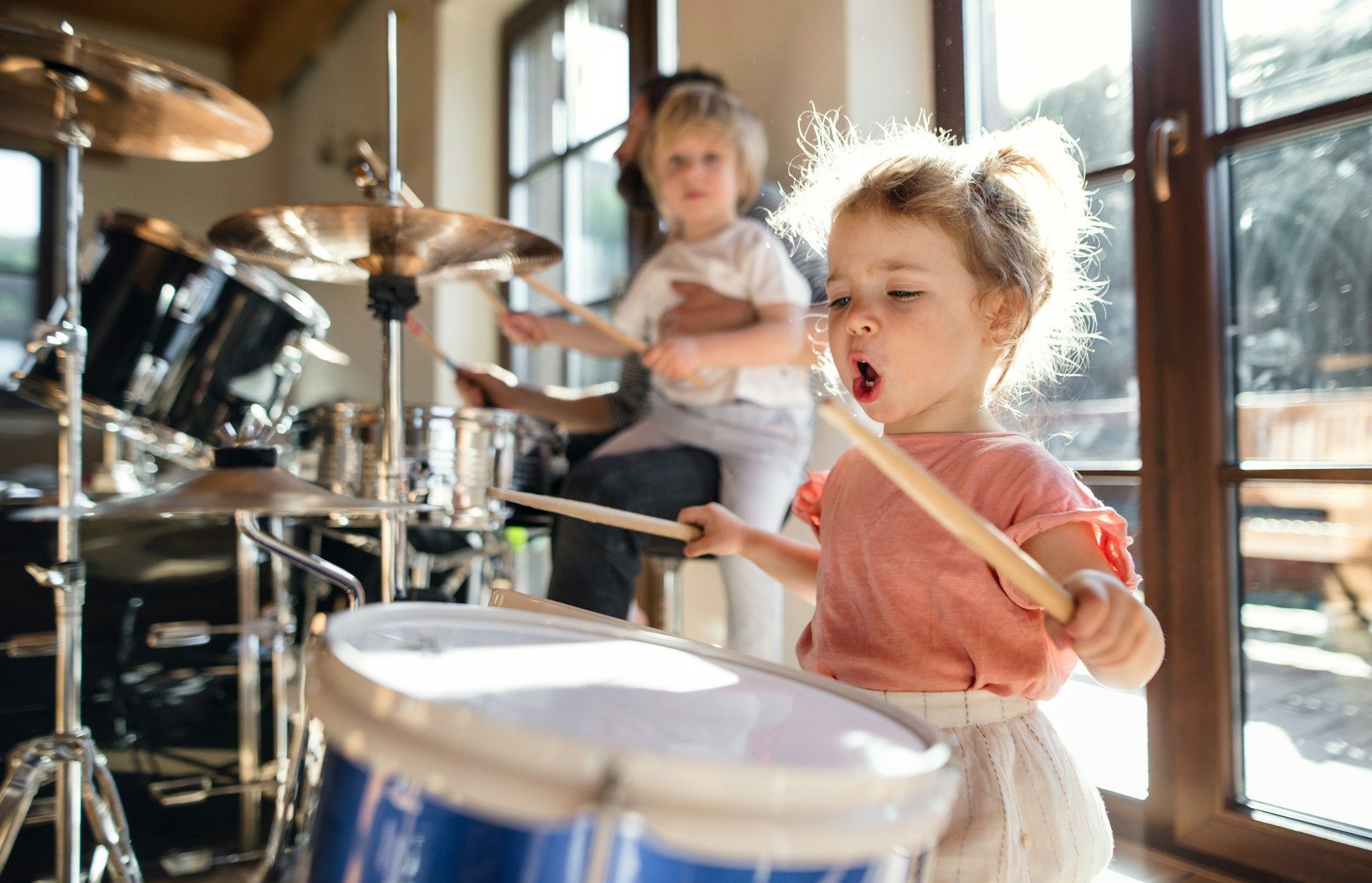
Rhythm-Ready Kids: Kickstarting Confidence Through Drums
Basic drumming is one of the easiest ways to turn kids’ natural energy into something positive and focused. Instead of tapping on desks or stomping around the house, they get to put that rhythm into a real skill that helps their brain, body, and confidence grow.
In Frisco and Prosper, many families look for after-school activities that are both fun and structured. Drumming checks both boxes. Kids get to be loud, move, and be creative, while still learning to listen, follow directions, and work toward clear goals. At Music Institute of North Texas, we focus on complete music education, so basic drumming is more than just “hitting the drums.” It is about building focus, coordination, and listening skills that help with schoolwork, sports, and everyday life. Here, we will walk through what basic drumming lessons are like, how kids progress, and how you can tell if drums might be a great fit for your child.
Why Drums Are a Smart First Instrument for Kids
Many kids are drawn to rhythm before anything else. They clap along to songs, bang on pots, tap on tables, and stomp in time without even thinking about it. Drums tap into that natural urge and give kids a quick win. From the very first lesson, your child can make sounds that feel exciting and musical.
Basic drumming builds core skills that help with any future instrument. When a child learns to keep a steady beat, count out loud, and listen closely, they are building the foundation for piano, guitar, and school band instruments later on. Rhythm is the heartbeat of music, and drums put that heartbeat front and center.
Drumming is also great for child development. It helps kids:
- Improve fine and large motor skills, using both hands and feet
- Build body awareness, balance, and coordination
- Practice emotional expression through loud and soft sounds
- Learn self-control by following cues on when to play and when to be silent
That last part is big. Playing drums is not just about making noise. It is about learning to stop, wait, listen, and then come in at the right time. Those are the same self-control skills teachers love to see in the classroom.
What Happens in a First Basic Drumming Lesson
A first lesson should feel welcoming, not scary. At Music Institute of North Texas, we keep things warm and relaxed so kids feel safe and excited instead of nervous. A typical first basic drumming lesson might look like this:
- A friendly greeting at the front desk and a quick look around the studio
- Meeting the teacher, who will ask a few simple questions about your child’s favorite music and any past experience
- Getting settled at a drum set or practice pad, adjusted to your child’s height
Once your child is set up, the real fun starts. For younger beginners, a first lesson often includes:
- Learning how to hold the drumsticks in a relaxed, safe way
- Trying loud and soft sounds, fast and slow, to explore what the drums can do
- Copying simple rhythms that the teacher plays, like short echo games
- Playing along with a very simple beat to a familiar song
The main goal of the first lesson is confidence. The teacher keeps directions clear and gentle, breaks everything into small steps, and celebrates little wins. We want kids to leave that first day thinking, “I can do this,” and already looking forward to coming back.
Building Skills Week by Week with Basic Drumming
As weeks go by, lessons shift from simple play to more structured learning, while still staying fun. Kids move from single hits to short patterns and then to basic beats that sound like real songs.
Over time, your child will start to:
- Keep a steady beat with one hand, then both hands
- Add the feet, working in easy patterns on the bass drum and hi-hat
- Learn basic note values, like quarter notes and eighth notes
- Read simple rhythm notation on the page
- Play along with backing tracks or favorite songs at a steady tempo
Teachers use lots of small tricks to keep kids motivated. Some common tools are:
- Short rhythm games and call-and-response exercises
- “Challenge levels” where kids unlock new beats when they master old ones
- Stickers or practice charts to celebrate consistent effort
- End-of-lesson “mini performances” so kids can show a parent what they learned
Progress looks different for every child, but the pattern is the same: small steps, repeated often, turn into real skills that kids feel proud of.
Group vs. Private Drum Lessons for Young Learners
Both private and group drum lessons can work well, and the best choice usually depends on your child’s age, personality, and goals.
Private lessons are a strong fit for kids who:
- Prefer one-on-one attention
- Have specific goals or learn at a different pace
- Need a quiet, focused setting to stay on track
Group basic drumming classes add a social side to learning. In a small group, kids:
- Learn to listen to others and keep time together
- Take turns and wait for their “spot” in a song
- Feel like part of a mini band, which can be very motivating
At Music Institute of North Texas, we offer both options and help families choose what makes the most sense at each stage. Some kids start in a group to build comfort and then move to private lessons later, or do the opposite. The main goal is to keep them engaged and growing.
Practice Made Possible: Setting up for Success at Home
Parents often worry about practice, especially with a loud instrument like drums. The good news is that basic drumming practice can be simple and short, especially in the beginning.
Helpful tips for at-home success:
- Pick a regular time, like after homework or before dinner, so practice becomes a habit
- Keep it short for younger kids, often 10 to 15 minutes is enough
- Focus on effort, not perfection, and praise steady practice more than “perfect” songs
You also do not have to buy a full drum set right away. Many beginners start with:
- A practice pad and a pair of drumsticks
- A simple music stand or table to hold music
- Headphones and a device to play songs or tracks
A practice pad is quieter and more affordable, but still builds the same core skills. Your child’s teacher can guide you on when, or if, it makes sense to move to a full drum set.
To keep practice fun, try:
- Playing along with favorite songs at home
- Using simple rhythm apps or a metronome for “beat games”
- Joining in yourself or inviting siblings for a short “family jam”
When practice feels like play instead of a chore, kids are much more likely to stick with it.
From First Beat to Bigger Goals
Basic drumming is just the starting point. As kids grow more confident, they can move into more advanced drum set work, school band percussion, rock band-style groups, performances, and even exam preparation with their teacher’s guidance. The same beat that started on a practice pad can one day support full songs on stage.
Our main focus is on helping children build confidence and skills through rhythm. For families in Frisco and Prosper, that often starts with young beginners discovering how fun and rewarding basic drumming can be. Teens and adults are also welcome to begin or continue their drumming journey, with options available for all ages, but our programs are built first and foremost to support kids as they grow through music.
Start Your Drumming Journey With Confidence Today
If you are ready to turn curiosity into real skills, our instructors are here to guide you from your first beat to full songs. Explore our basic drumming lessons and discover how structured guidance can accelerate your progress. At Music Institute of North Texas, we tailor each session so you build technique, timing, and confidence at a pace that fits you. Have questions about scheduling or class options? Just contact us and we will help you get started.