
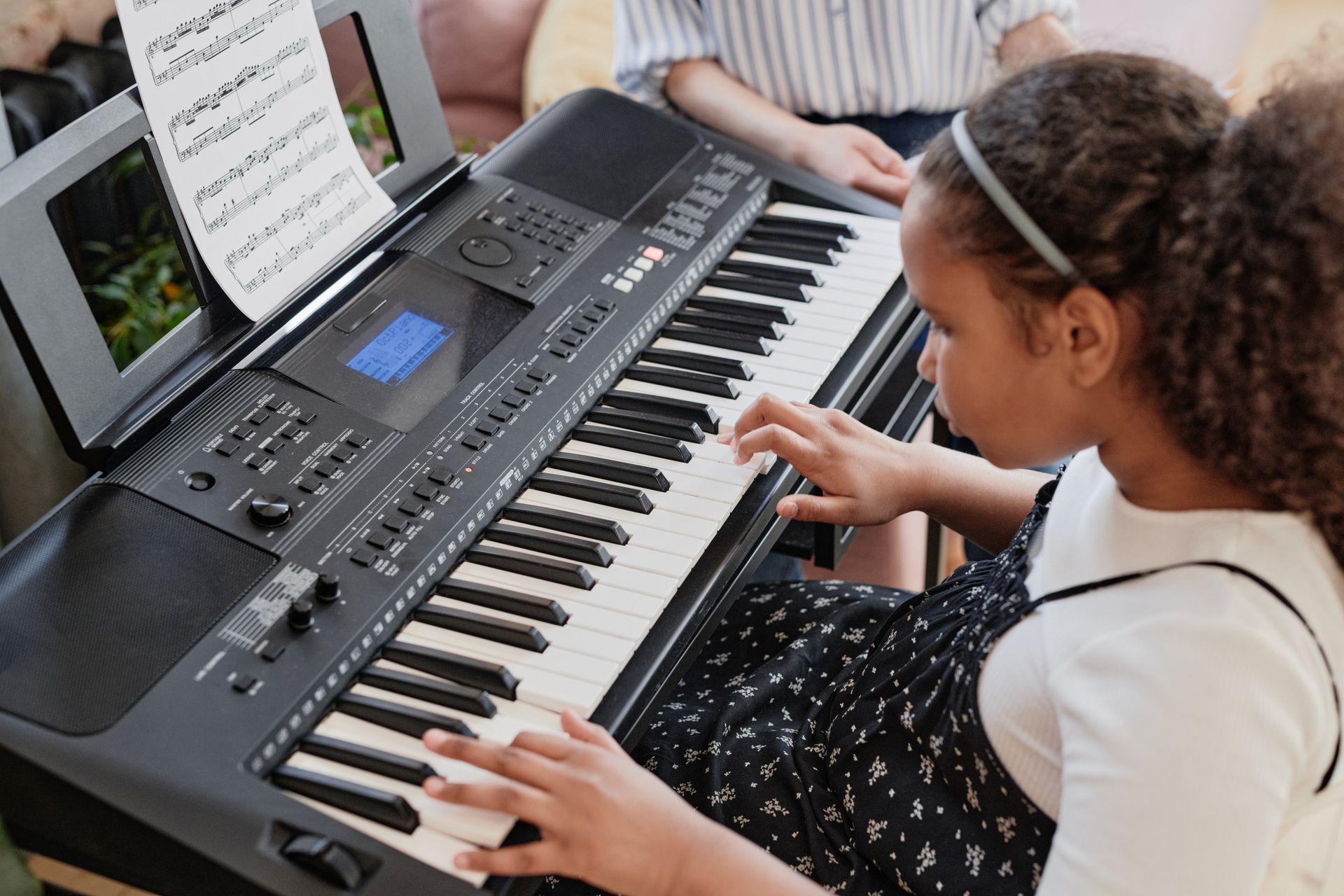
Creating a First Music Plan for Kids Piano Lessons in Frisco
Set Your Child up for a Confident First Piano Year
Starting kids' piano lessons in Frisco can feel exciting and a little overwhelming, especially as school, sports, and fall activities fill the calendar. A simple plan can make piano feel like a calm, steady part of your week instead of one more thing to juggle.
A “first music plan” is just a short, family-friendly roadmap for your child’s first 6 to 12 months at the piano. It helps you decide why you are starting, what you hope your child will gain, and how lessons will fit into real life at home.
At Music Institute of North Texas, we are a local music school in the Frisco and Prosper area, and our teachers are university-trained. We focus on giving kids a clear, structured path in piano and other instruments, and we also welcome adult students as a secondary part of our program. In this article, we will walk through goals, schedules, practice, and performance so that piano can become a joyful, low-stress part of your family routine.
Clarify Your Child’s Piano Goals From the Start
Clear, kid-centered goals give you and your child a shared “why” for lessons. They influence the lesson length you choose, how often your child practices, the kind of instrument you have at home, and even which teacher will be the best match.
Common first-year goals for kids include:
- Building basic music skills like finding notes, clapping rhythms, and reading simple music
- Growing confidence, focus, and patience
- Working toward a spring recital or a small holiday performance for family
- Laying a foundation for future band, choir, or orchestra at school
It also helps to match those goals to your child’s age and personality:
- Ages 4 to 7: Keep it light and playful. Think exploration, short wins, and lots of musical games.
- Ages 8 to 12: Focus on reading music, steady progress through books, and building simple practice habits.
- Teens: Aim for specific styles they love, like pop or worship music, or prepare for school music opportunities and auditions.
Take a minute to write your goals in a short “First Piano Plan.” A few lines are enough. For example: “We want our child to learn basic notes, enjoy music, and be ready to play one song for family in a few months.” Share this with your piano teacher at Music Institute of North Texas so everyone works toward the same outcomes.
Choose the Right Lesson Structure for Your Family
Next, think about what lesson structure fits your child and your week. In kids' piano lessons in Frisco, common options are:
- 30-minute weekly lessons for young beginners or kids with shorter attention spans
- 45-minute lessons for older children or students who are ready to focus longer
- Longer lessons for advancing young players who need more time for technique, theory, and pieces
Our university-trained piano teachers help families choose a starting length by looking at age, attention, and any past music experience. A child who loves to sit and draw for long stretches might do well with a longer lesson earlier, while a very active young beginner might thrive with shorter, consistent sessions.
Scheduling also matters:
- Time of day: After school can work well if you go straight from school to piano, while early evening might fit better if your child needs a snack and break first.
- Day of the week: Try to avoid nights packed with sports, dance, or heavy homework. Pick a day that usually feels calmer.
- Starting in November: Many families like starting before winter. You can use the season as a natural “marker,” then enjoy a fresh, organized schedule when school starts again in January.
Adult lessons are available as well, and can be scheduled around your child’s lessons. Some families choose overlapping times for kids and parents, which helps keep the weekly drive simple and shows kids that music is something people can enjoy at any age.
Create a Kid-Friendly Home Practice Plan
Practice does not have to be long or intense to be effective, especially in the first year. What really matters is consistency and a calm, positive tone around practice.
A simple guideline for kids is:
- Ages 4 to 6: 5 to 10 minutes, 4 or 5 days per week
- Ages 7 to 10: 10 to 20 minutes, about 5 days per week
- Ages 11 to 18: 20 to 30 minutes, about 5 days per week
Instead of asking for “go practice,” connect practice to a routine your child already knows:
- Right after a snack
- Before screen time
- Right after getting home from school on certain days
Keep the piano or keyboard in a space where family life happens, like a living room or game room, so practice feels social instead of lonely. A simple calendar or sticker chart can make it fun to keep track of practice streaks and celebrate when your child meets a weekly goal.
From November through winter, you can add small seasonal goals, such as:
- Learning a simple tune to share with grandparents or friends
- Planning a tiny home “mini-recital” before the New Year, with one or two short pieces
Our teachers at Music Institute of North Texas support home practice by giving clear, written assignments, breaking pieces into small, achievable steps, and offering encouragement that fits each child’s personality.
Build Motivation with Performances and Milestones
For many kids, their first chance to share music is a huge motivator. It does not have to be a big, formal recital to matter. Playing even a very short song for family can light up a child’s sense of pride.
We structure performance opportunities primarily for kids in several ways, such as:
- Formal recitals in the Frisco and Prosper area
- Possible small studio sharing times or group performances, when offered
- Informal chances to encourage kids to share music at home with family and friends
You can fold simple milestones into your first music plan:
- Months 1 to 3: Learn basic hand position, a few simple songs, and first notes on the staff
- Months 4 to 6: Play with both hands together, keep a steady beat, and read short pieces more independently
- Months 7 to 12: Prepare a recital or sharing piece and explore styles your child enjoys
Keep expectations healthy. Focus on progress, not perfection. Each performance is a chance to build confidence, focus, and comfort on stage, not a test. For older kids, milestones might include auditions, worship band parts, or school ensemble music, all supported by structured teaching. Adult students can also work toward their own personal performance goals if they wish.
Partner with a Piano Teacher Who Fits Your Child
The right teacher is one of the most important parts of any first music plan. This is especially true for young beginners who are still forming their ideas about music and learning.
University-trained teachers bring:
- A strong foundation in technique, music reading, and theory
- Skill in adapting lessons to different ages, learning styles, and goals
- Experience preparing students for recitals, exams, and school music programs
When you explore kids' piano lessons in Frisco at Music Institute of North Texas, you might ask:
- How do you keep younger kids engaged and focused?
- How do you support families when practice is a struggle at home?
- What does a typical first lesson look like for a new student?
Learning at a dedicated music school gives your child a consistent curriculum, clear steps forward, regular recital options, and the chance to add other instruments like strings, voice, guitar, or drums later. Bring your simple first music plan to your teacher so lessons, practice, and performances stay aligned and your child feels supported from every side.
FAQs About Starting Kids’ Piano Lessons in Frisco
Q: How young is too young to start piano lessons?
A: Many kids are ready when they can focus for a few minutes, follow simple directions, and enjoy short activities. Some start in early childhood, while others are more ready a little later. We welcome young beginners and help families decide if now is the right time.
Q: Do we need a real piano, or is a keyboard okay at first?
A: A keyboard can work for a beginning stage, especially if it has full-size, weighted keys and a stand that lets your child sit at the correct height. Over time, many families move to an acoustic piano for better touch and sound as interest grows.
Q: What if my child is busy with sports or other activities?
A: Many active kids do well with a realistic practice plan and smart scheduling. Weekly lessons give structure, and even short, steady practice can lead to meaningful progress.
Q: How do I know if my child is actually progressing?
A: In the first 3 to 6 months, you might notice better hand position, more confident reading of simple music, improved focus, and a small list of songs your child can play. Our teachers keep parents updated on these milestones and what is coming next.
Q: Can siblings or parents take lessons too?
A: Yes. We primarily teach kids, and we also offer lessons for teens and adults, as well as other instruments. Many families enjoy turning music into something they share together, with different family members learning at the same school.
Give Your Child A Musical Head Start Today
If you are ready to nurture your child’s creativity and confidence at the piano, our
kids' piano lessons in Frisco are a great place to begin. At Music Institute of North Texas, we tailor each lesson to your child’s age, pace, and goals so learning feels natural and fun. Reach out to
contact us and schedule your child’s first lesson so we can help them start making music they are proud of.