Questioning Kids’ Cello Lessons in Frisco, TX After Orchestra Starts
When Orchestra Starts, Doubts Start, Too
When school orchestra kicks off and your child walks in holding a brand‑new cello, it can feel exciting and a little stressful for everyone. A few weeks later, real life sets in: homework piles up, sports are in full swing, and family calendars start to fill. This is usually when parents begin to wonder if private cello lessons in Frisco, TX are really needed on top of school orchestra.
Those questions make sense. You might be thinking, “If there is a teacher at school, why add more?” or “Are we just overloading our child?” In this article, we want to share how private lessons can actually make the whole experience easier, not harder, and why kids often feel more confident and less frustrated in orchestra when they have one-on-one support behind them.
As fall concerts and later spring performances come into view, that extra support can be the difference between a child dreading rehearsal and a child walking in ready, calm, and proud of what they can play.
Why School Orchestra Alone Is Not Enough
School orchestra is a great place for kids to make friends and learn to play as a group, but it is not built to give every child deep, personal help. A typical class might have many string players, all with different needs. The teacher has to keep the whole group moving together, so there is only a small amount of time to fix each child’s posture, bow hold, and reading skills.
Here are some common limits of group-only learning:
- Large classes mean very short one-on-one moments
- Mixed ability levels, from kids who already play to kids touching a cello for the first time
- Limited time to explain a hard rhythm or tricky fingering more than once
- Quiet kids can slip behind without anyone noticing right away
Because the class has to move at a middle speed, some children fall behind silently. They might start “faking it” on pieces, moving the bow but not really playing the notes. Other kids pick things up faster and feel bored, so they disconnect and stop caring.
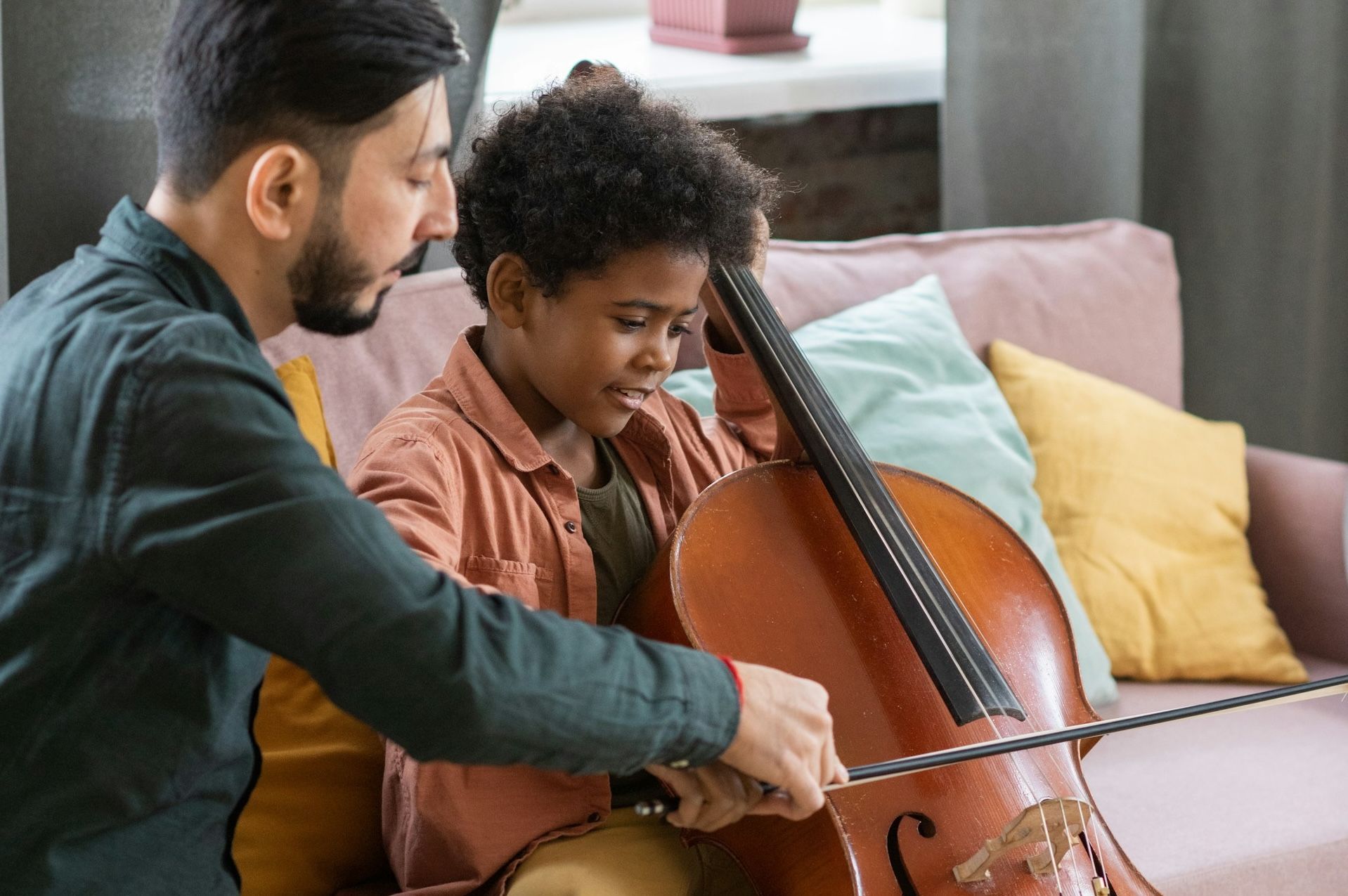
Real music growth usually happens one child at a time. A private teacher can pause, watch closely, adjust the bow hand, redraw finger numbers, and ask, “What is actually confusing you here?” With that kind of focused help, kids build a strong base and enjoy their school orchestra more instead of just trying to survive it.
How Private Cello Lessons Support School Success
Private cello lessons do not replace orchestra; they power it up. Think of the private lesson as the place where your child gets to slow down and really understand what is on the stand in front of them at school.
A private cello teacher can:
- Break down orchestra music into small, simple steps
- Mark fingerings and bowings so your child knows exactly what to do
- Clap and count rhythms until they feel natural
- Help tune the cello and teach your child to tune with guidance
When your child walks into rehearsal already knowing the notes and rhythms, everything changes. Instead of feeling lost, they can focus on playing with the group, watching the conductor, and listening to others. That leads to:
- Better chair placements and more confident playing tests
- Less stress before concerts, since the music already feels familiar
- A sense of pride when they can actually hear themselves fitting into the group
With regular lessons, we can line up what your child is doing at home with what they are doing at school, so every bit of practice counts twice.
Spotting Real Struggle vs Normal Growing Pains
The early weeks and months of cello are not supposed to look perfect. It is normal for kids to squeak, miss notes, and read music slowly. Sometimes they will not want to practice, or they will be grumpy about a new skill that feels hard.
Normal growing pains often look like:
- Occasional complaints about practice, then they settle in
- Squeaky or scratchy sounds that slowly improve
- Mixing up finger numbers or note names now and then
- Feeling nervous before a playing test, but bouncing back after
Real struggle is different. Red flags might be:
- Tears before rehearsal or lessons on a regular basis
- Saying they want to quit right after falling behind in class
- Suddenly “hating” cello after a low chair placement or a rough test
- Avoiding taking the cello out of the case at all
A kind, skilled private teacher can change this story. We can help kids see that mistakes are part of learning, not proof that they are “bad” at music. By choosing just a few small goals each week and celebrating every gain, kids can feel progress quickly and move past one bad test or one hard piece instead of quitting right when things are about to start clicking.
Building a Practice Routine That Actually Works
Practice does not have to be a daily battle or a long, drawn-out event. Short, steady sessions usually beat long weekend marathons, especially for kids with busy schedules.
Simple guidelines that help many families include:
- Younger beginners: 10, 15 minutes a day, most days of the week
- Older beginners and early middle school: 15, 25 minutes a day
- More advanced players: 25, 35 minutes a day, with clear goals
A private teacher makes practice easier to manage by giving:
- Clear weekly goals written in a notebook or online
- Small practice checklists, such as “Play line 3 three times”
- Ways to use orchestra music in practice so it feels more connected
Parents play a big role too. You do not have to know anything about cello to help. You can:
- Create a quiet, regular spot for practice
- Set a consistent time, like right after snack or before dinner
- Encourage small wins instead of only pointing out mistakes
- Stay in touch with your child’s cello teacher about what is working and what is not
When practice feels clear and predictable, kids are more likely to stick with it and to feel proud bringing their instrument into school each day.
Choosing Cello Lessons in Frisco, TX with Long-Term Growth in Mind
If you decide to add private lessons, it helps to think beyond just fixing one hard piece. The right program will support your child from their first open strings through harder music, auditions, and beyond.
Things many parents look for include:
- University-trained teachers with strong playing and teaching experience
- A step-by-step curriculum so skills build in a clear order
- Regular recitals or performance chances to build stage comfort
- Teachers who understand local school orchestra expectations
At Music Institute of North Texas, we offer kids’ cello lessons in Frisco, TX and Prosper with a structured approach that supports beginners and advancing students over the long term. Adult lessons are available as well, but our main focus is helping kids grow from their first simple orchestra pieces toward region auditions, youth ensembles, and a lifetime relationship with music that feels joyful, not stressful.
Start Your Musical Journey With Confident Cello Skills
If you are ready to help your child grow musically with personalized instruction, our
cello lessons in Frisco, TX are designed to support clear progress at every level. At Music Institute of North Texas, we focus on building strong technique, musical expression, and a genuine love for playing. We will work with you to find lesson times and goals that fit your schedule and needs. Have questions or want to schedule a trial lesson? Simply
contact us to get started.