
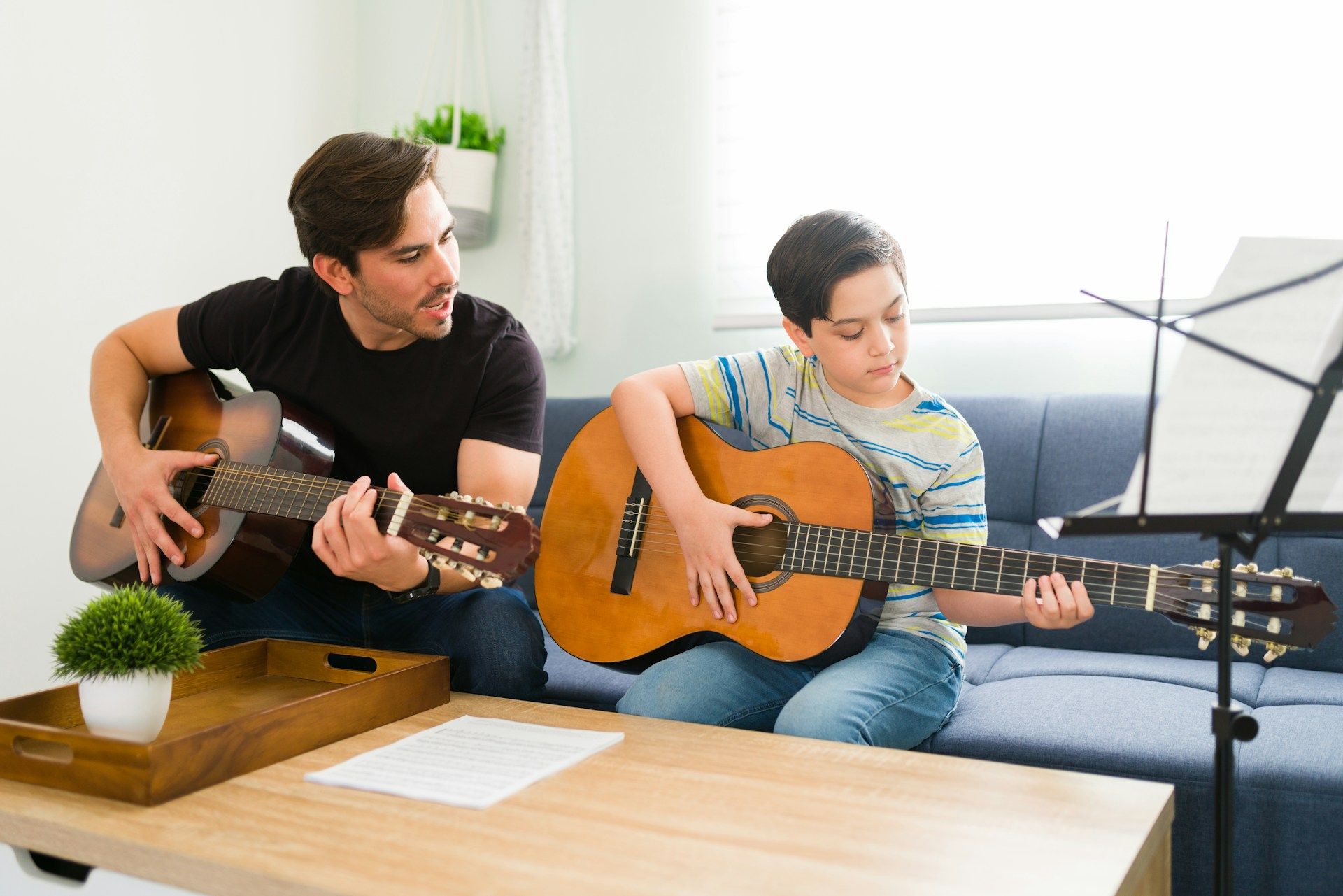
How Beginner Guitar Lessons Spark Confidence in Kids
Starting guitar can change the way a child sees themself. A shy kid who barely raises a hand in class can suddenly light up when they strum a song they recognize. That feeling of “I did it” sticks, and it often shows up later in schoolwork, friendships, and how they handle challenges.
Early music experiences help kids learn to focus, follow steps, and express feelings in a healthy way. With beginner guitar lessons in Frisco, children are not only learning chords. They are learning to listen carefully, keep a steady beat, and take responsibility for an instrument that is all their own. These skills grow their confidence, both on and off the stage.
At our school, we welcome students of all ages, but this guide is all about children who are just getting started on guitar, especially as families settle into fall routines. We want you to know what actually happens in those first lessons and how it helps your child grow.
Getting Comfortable with the Guitar From Day One
Before kids can make great sounds, they need to feel safe and in control of the guitar. That starts with simply getting to know it. In the first lessons, we show kids the main parts of the guitar and give each part a clear, simple job.
Kids learn things like:
- Body: the big hollow part that helps the sound ring
- Neck: the long part they hold with the left hand
- Strings: where the sound begins
- Frets: the metal lines that help fingers find the right note
We spend time on how to sit and hold the guitar so it does not feel too heavy or awkward. For young players, this can make the difference between loving guitar and wanting to quit. We guide them to:
- Sit up tall in a chair with feet flat on the floor
- Hold the guitar close to the body instead of letting it slide away
- Curve the left-hand fingers so they press the strings with the tips
- Keep the right hand relaxed so it can strum or pluck without tension
Kids are also introduced to tuning in a simple, friendly way. We explain that tuning means making each string sound “just right” so songs do not sound strange or sour. At first, a teacher or parent may do the actual tuning, but kids start to notice when something sounds off and when it feels just right again. This early ear development is very important later on.
First Sounds: Rhythm, Strumming, and Fun Patterns
Once a child can hold the guitar comfortably, it is time to make sounds, and this is where the fun really kicks in. We do not jump straight into hard chords. Instead, we start with rhythm, because rhythm is the heartbeat of all music.
We use simple activities like:
- Clapping a steady beat together
- Counting out loud, often “1-2-3-4”
- Tapping feet while clapping or strumming
These games help kids connect sound to movement, which is great for focus and coordination. Then we move to the first strumming patterns, often using open strings so there is no pressure to hold down notes yet.
Typical first patterns include:
- Single downstrokes on all the strings
- Slow, even downstrokes in time with a song
- Simple down-up patterns to feel the natural swing of the hand
We match these patterns with familiar tunes, even if it is just the rhythm at first. Kids feel proud when they realize they are “playing along” to a song they know. By keeping patterns simple and fun, we build confidence and make sure they do not feel overwhelmed by too many details at once.
Easy Chords and Songs Kids Actually Want to Play
As their hands get used to the guitar, we begin to add easy notes and chords. For small hands, big, full chords can be painful and frustrating at first, so we take a gentle, step-by-step approach.
Early chord work might look like:
- Single-string notes that build finger strength
- Little “mini” chords that use just one or two fingers
- Kid-friendly versions of common chords like G, C, and D
Instead of giving kids songs that feel dull, we aim for music they actually like. That could be a simple pattern from a movie theme, a holiday tune later in the year, or songs they might hear at school programs. When kids recognize the melody, they are far more excited to practice.
To help practice stick, we guide families to:
- Keep practice short, often 5 to 10 minutes at a time
- Pick a regular time of day, like after homework
- Focus on one or two small goals per week
These small wins add up quickly, and parents can see progress without needing to “teach” guitar themselves.
Building Musical Skills Beyond the First Lesson
As kids get more comfortable with the basics, beginner guitar lessons in Frisco start to open up a wider musical world. One big part of that is ear training. We help kids hear differences such as:
- High notes versus low notes
- Loud sound versus soft sound
- When a note matches or does not match the song
This careful listening is the foundation for reading music later. Once kids know a few chords and rhythms, we can start to introduce simple reading. That might be guitar tabs with numbers, basic notes on a staff, or simple rhythm symbols, depending on the child’s age and learning style.
We also make room for creativity. Kids might:
- Make up their own strumming pattern for a familiar song
- Choose which chord to end on
- Try a tiny “solo” using a few safe notes
When they are invited to make musical choices, they feel that the guitar belongs to them, not just to the teacher. That sense of ownership keeps motivation high.
Why Families in Frisco Choose a Structured Guitar Program
Many families try to start guitar with random videos, and kids often end up jumping from one trick to another without real progress. A structured program with dedicated teachers gives children a clear path.
A good program offers:
- Step-by-step skills that build on each other
- Clear goals, like “this week we master this rhythm”
- Thoughtful song choices that match each child’s level
Our teachers focus on creating a safe, encouraging space. Mistakes are treated as part of learning, not something to fear. Shy kids can take time to warm up, and more outgoing kids still learn to listen and follow directions.
Community is another big part of guitar study. Group classes and recitals give kids the chance to:
- Practice playing in front of others
- Cheer on classmates and learn from them
- Share what they have learned with family and friends
As fall schedules settle in Frisco and Prosper, many families find it is a natural time to start beginner guitar lessons in Frisco. With Music Institute of North Texas, children can explore guitar for fun or begin building skills that will last for years, starting with strong basics that support confidence, focus, and creativity.
Start Your Guitar Journey With Confidence Today
If you or your child is ready to learn, our beginner guitar lessons in Frisco are designed to build skills step by step in a relaxed, encouraging environment. At Music Institute of North Texas, we focus on solid fundamentals so you can play real songs sooner and stay motivated. Have questions about scheduling, instructors, or pricing? Just contact us and we will help you choose the best starting point.